























Tyre Pressure in Qatar: What Is the Right PSI for Your Car?
Imagine leaving the air-conditioned comfort of the mall on a Doha summer day and stepping into the inferno outside – now imagine the effect that heat has on the air inside your tyres. Tyre pressure in Qatar is not just a standard issue for keeping your car in good condition; it’s one of the few variables that change seasonally in Qatar, sometimes even daily. Guess wrongly and be prepared for rapid tyre wear, bad fuel economy, and, worse still, a tyre blow-out on Salwa road driving at 120km/h. Get the tyre pressure right and enjoy improved handling and fuel efficiency.
This article will look at the exact amount of PSI you should use in each situation, the reasons why Qatar is more difficult when it comes to tyre pressure than many other countries, and how you can achieve the optimum Tyre pressure in Qatar without having to guess.
Why Tyre Pressure in Qatar Matters More Than You Think
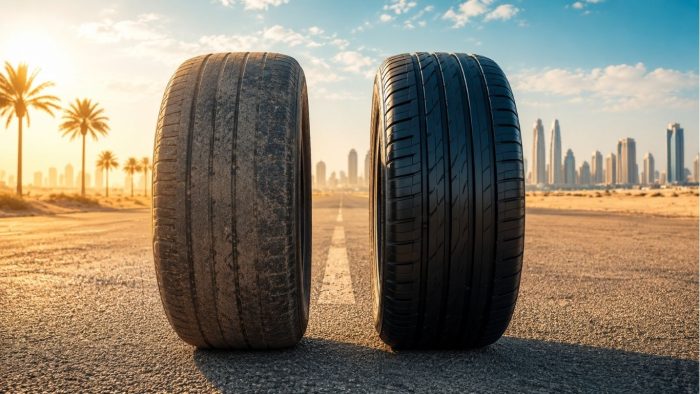
It is hard to understate how damaging the heat in Qatar can be to your tyres’ rubber composition. Road surface temperatures can rise above 60 degrees Celsius in the height of the summer, and that has a direct influence on your tyres’ internal air pressure since the heat makes the air expand inside them. Thus, your tyres that were perfectly inflated in the morning will show much higher pressure in the afternoon after an extended period of highway driving.
And the pressure level in your tyres is crucial to your safety, to the tyre’s lifespan and to fuel economy because of that. Underinflated tyres will flex more, will generate extra heat due to friction and will wear disproportionately more around the edge of the tyre. An overinflated tyre, on the other hand, reduces contact patch between the rubber and the ground, which increases tyre wear rate and makes driving harder and less comfortable. In a place where the daily temperature difference can vary from 15 to 20 degrees Celsius, the tyre pressure becomes even more relevant.
What Is the Right PSI for Your Car in Qatar?
There is no universal correct tyre pressure for your tyres – the correct pressure depends on the car’s make, model, weight and tyre dimensions.
Where to Find Your Car’s Recommended PSI
There’s a precise number for each make, and here’s where you’ll find it:
- On the tire placard on the driver’s side door jamb — this is the most accurate method because it takes into account your specific car’s weight balance.
- In your owner’s manual, usually located in the “tyres” or “specifications” section.
Don’t use the figure on the side of your tyre; that’s its maximum safe pressure.
Standard PSI Range for Different Vehicle Types
These are general guidelines (check yours before you start):
- For sedans and compact cars: 30-35 PSI
- For SUVs and crossover models: 32-38 PSI
- For pickup trucks (empty): 35-40 PSI
- For loaded/towing pickup trucks: 5-10 PSI more than empty — check the manual
Not sure? The experts at Imalco can find that out for you and ensure the proper PSI in the course of a tire inspection.
How Qatar’s Heat Affects Tyre Pressure
Here’s a rule worth remembering: for each 10°C of temperature increase, your tyre’s pressure will also go up by 1-2 PSI. When we take into consideration how much the temperature changes between January morning and July afternoon in Qatar, we get a very significant difference.
This is precisely why tyre pressure in Qatar has to be measured when tyres are “cold” – meaning that they have been standing still for at least three hours or driven for less than 2 km. Measuring tyre pressure after a long drive will yield the result which does not represent the correct pressure level.
Many drivers in Qatar make the same mistake in the summer period by decreasing the level of PSI in order to compensate for the increase due to heat expansion. Unfortunately, such practice is unnecessary because the recommended value already takes into account the ambient conditions. Intentionally under-inflating the tyres in order to compensate for heat is nothing but adding more risks.
How to Check Tyre Pressure in Qatar the Right Way
Measuring the pressure level of your tyres properly takes less than 5 minutes. Here is how to do it:
- Measure tyres when they are cold, preferably in the morning before starting the car.
- Find out the recommended PSI on the door jamb label.
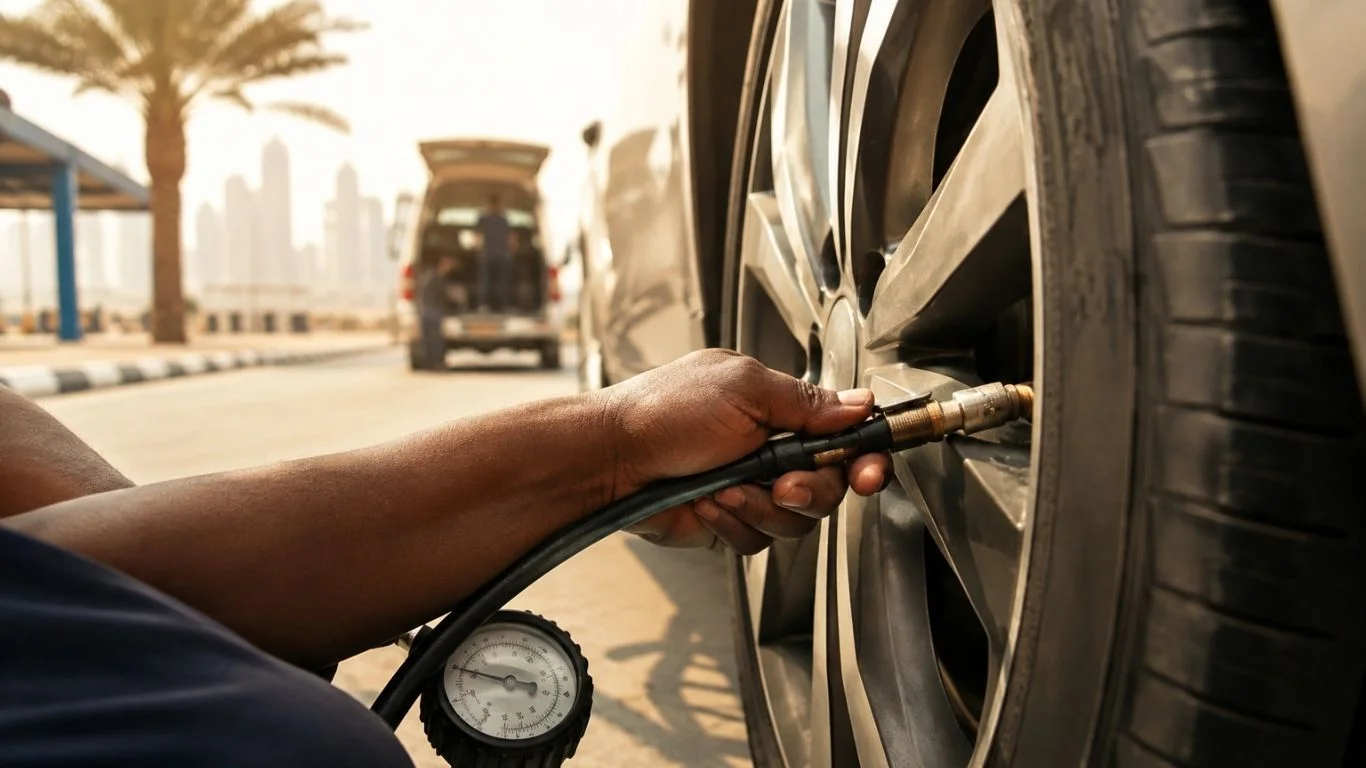
- Remove the valve cap and attach the gauge securely to the valve stem.
- Compare the readings to the manufacturer’s recommendations and inflate/deflate the tyre if necessary.
- Remember to measure the pressure of the spare tyre as well since this step is often forgotten.
- Put the valve cap back on to keep the dust and sand particles away. The latter are usually the reason of slow leaks in Qatar.
The air pumps available at petrol stations can be imprecise. For more accurate measurement we recommend coming to one of our Imalco branches or booking our mobile tyre service.
Signs of Incorrect Tyre Pressure
- Sometimes it isn’t necessary to use a gauge. Just watch out for:
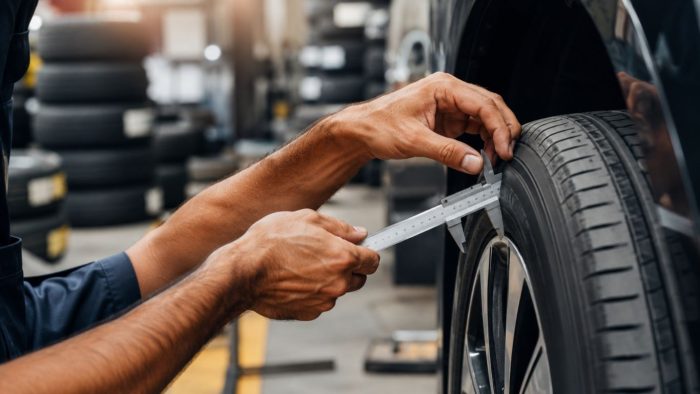
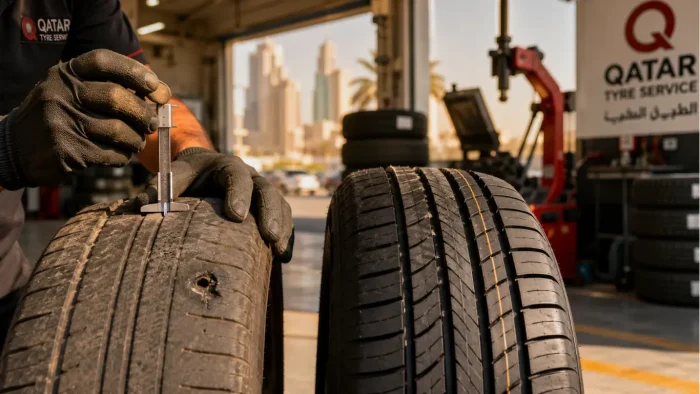
- Irregular tread wear – uneven wear around the edge indicates low tyre pressure, while centre wear typically suggests overinflation.
- Difficult steering or “wallowing” while cornering.
- Increased fuel consumption over several weeks.
- Tyre pressure monitoring system (TPMS) light on the instrument panel – never disregard that indicator in Qatar’s heat.
- Bulged or collapsed sidewalls when the car is parked on flat ground.
How Often Should You Check Tyre Pressure in Qatar?
In general, a good practice is to perform monthly checks of the tyre pressure in addition to pre-road trips – for example, to the Inland Sea or to cross the borders into Saudi Arabia. Considering how much temperature varies in comparison to moderate climates, a monthly check will be adequate; however, you may choose to do this twice a month during the hottest days of the year.
Checking your tyre pressure is recommended each time when the handling of the car is changed, after hitting the pot holes or kerb, or before a long distance trip with additional load.
Get Your Tyres Checked the Easy Way
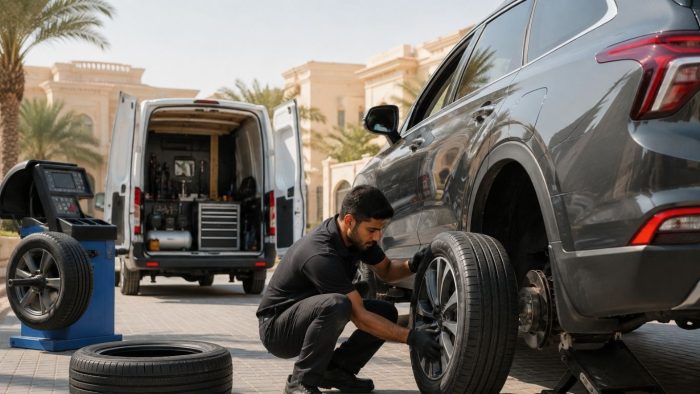
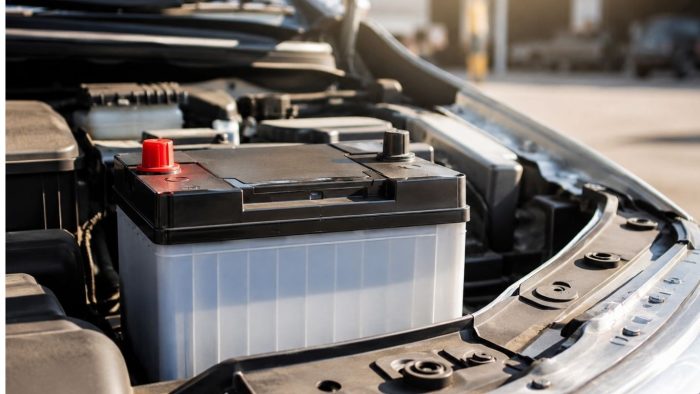
Taking care of correct tyre pressure in Qatar does not have to be an effort. At Imalco Web Store, you will find a variety of branded tyres tailored for the Qatar road conditions and weather, as well as recommendations on how many PSI your particular vehicle needs. We have 15 branches in Qatar, plus we deliver our mobile tyre and battery services straight to your house or office in a matter of minutes. You can buy the new tyres in Qatar with just a few clicks at our online store or schedule a visit to your nearest branch – our experts will gladly assist you with all the questions regarding the tyre choice.
Conclusion
Proper tyre pressure in Qatarr will not become your problem when you know how to do it. Take a look at the label at your door jamb, check the pressure when tyres are cool, and take the season into account instead of just guessing.
FAQs
Q1: What is the recommended tyre pressure in Qatar for a normal sedan?
Sedans in Qatar usually operate at 30-35 PSI range, but it depends on the particular model that you drive. Do not simply trust a generic number; always refer to the sticker on the driver’s door jamb or the owner’s manual as manufacturers set that value according to the car’s weight and tyre size.
Q2: Do I need to reduce tyre pressure in Qatar during summer?
No, the manufacturer-recommended PSI already considers typical driving conditions, such as heat. In the case of summer, deliberately lowering the pressure will lead to excessive tyre heating, wear, and even to possible blowouts.
Q3: How often should I check my tyre pressure in Qatar?
Check your tyres’ pressure monthly at least, but it would be better to do it once every two weeks during summer time. Do this before long trips, after hitting potholes, and when you feel that your handling is changing.
Q4: Is it possible to check tyre pressure at a normal petrol station?
Yes, almost all petrol stations in Qatar have air pumps. However, their calibration may be different from each other, so the best solution is to use a tyre pressure gauge or go to a professional service such as Imalco.
Q5: What will happen if I have either low or high tyre pressure?
Low pressure leads to tyre overheating, rapid wear and decreased fuel efficiency. High pressure, on the contrary, reduces your grip and leads to the centre-tread wear of the tyre.