























How to Choose the Right Tyre Size for Your Car (with Size Chart)
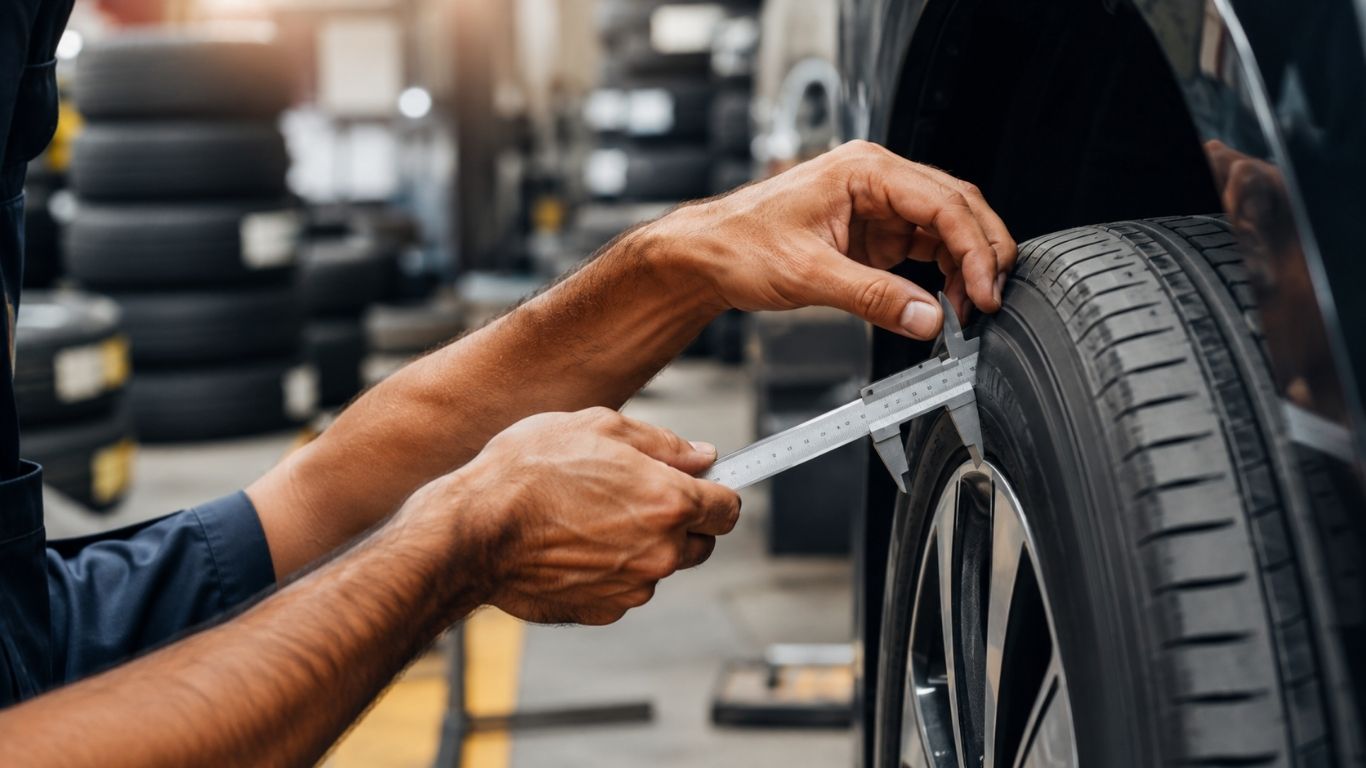
If you have ever stood in front of a wall of tyres feeling completely lost, you are not alone.The majority of motorists usually consider the size of tyres only after their puncture on the road, which is precisely the time when you shouldn’t be thinking about it. The ability to choose the right tyre size beforehand has many implications: from proper car handling, fuel economy, speedometer precision to your safety on the roads of Doha. This article describes in detail how to determine the right size of your tyres, what each number means, how to use a size chart and how to avoid common pitfalls and have your ride smooth and your warranty intact.
No matter whether your driving a compact sedan in the middle of the Salwa Road traffic or a powerful 4×4 for dunes on the weekends, knowledge of Choose the Right Tyre Sizewill save you both time and money. But if you want us to do all work for you, our experts on tyres at any of IMALCO’s offices in Doha will quickly find the perfect size for your car.
Why Choosing the Right Tyre Size Actually Matters
Choose the Right Tyre Size isn’t just about looks. It has a direct effect on three things: handling, accuracy of the speedometer/odometer, and strain put on the car’s suspension and transmission.
Even a tyre which is slightly different from the car maker’s recommended size will result in the ABS being miscalibrated, wearing out the brakes prematurely and affecting the gearing ratio of the car. That’s why all car manufacturers specify a precise size range – and why it’s worth learning how to Choose the Right Tyre Size in the few minutes it’ll take you to read this article.
Consequences of Choosing the Wrong Size
- Poor handling – oversized tyres might rub against the wheel wells or other parts of the suspension, particularly when cornering.
- Incorrect speedometer readings – larger or smaller size tyre will affect distance traveled by one wheel rotation, thereby making the speedometer inaccurate.
- Less fuel efficiency – larger or heavier than needed tyres will create increased rolling resistance.
- Warranty voided – some car manufacturers void the drivetrain warranty if non-recommended tyre size causes parts to fail.
How to Read a Tyre Size: Decoding the Sidewall Code
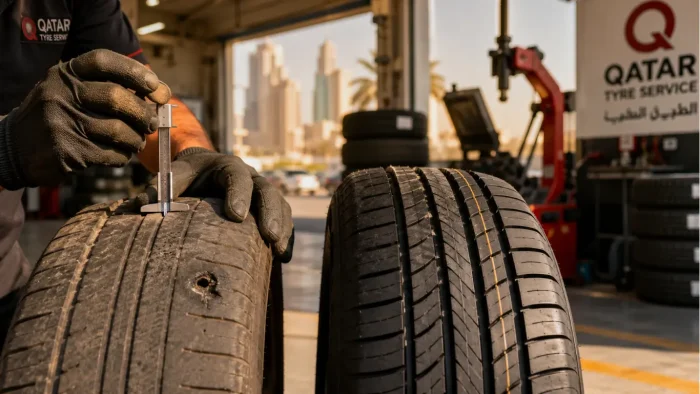
Before you can choose the right tyre size, you need to be able to read the code printed on your current tyre’s sidewall. Something along these lines: 215/60R16 95H. A password, in a sense, with each part carrying meaning.
Breaking Down the Numbers
| Code Segment | Example | What It Means |
| 215 | Section width | Width of the tyre in millimetres, measured sidewall to sidewall |
| 60 | Aspect ratio | Sidewall height as a percentage of the section width (60% of 215mm) |
| R | Radial | Construction type — almost all modern passenger tyres are radial |
| 16 | Rim diameter | Wheel diameter in inches that the tyre is designed to fit |
| 95 | Load index | Maximum weight the tyre can carry when properly inflated |
| H | Speed rating | Maximum safe speed the tyre can sustain under load |
Once you learn how to read this code properly, you are halfway towards Choose the Right Tyre Size.
Quick Definitions Worth Knowing
- Section width: in millimetres, it’s the tyre’s width from one outer sidewall to another.
- Aspect ratio: a smaller number (40 or 45) means shorter and stiffer sidewalls of a sportier setup, while a larger number (65 or 70) means taller and cushionier sidewalls of SUVs and family cars.
- Load index: it’s not the kilogram value but rather an index that corresponds to a maximum load chart. For example, load index 95 corresponds to 690 kg per tyre.
- Speed rating: letters such as S, T, H, V, and W each mean a maximum sustained speed of a tyre, with H-rated tyres good up to 210 km/h.
Tyre Size Chart: Common Sizes by Vehicle Type
Below is a guide chart that provides some of the commonly used tyre sizes per type of vehicle. Check your exact car for the right fit before buying tyres.
| Vehicle Type | Common Tyre Sizes | Typical Use |
|---|---|---|
| Compact Sedan (e.g., Corolla, Elantra) | 195/65R15, 205/55R16 | City driving, fuel efficiency |
| Mid-size Sedan (e.g., Camry, Accord) | 215/55R17, 225/50R17 | Comfort and highway stability |
| Compact SUV (e.g., Tucson, CR-V) | 225/60R17, 235/55R18 | Mixed city and light off-road |
| Full-size SUV (e.g., Land Cruiser, Patrol) | 265/65R17, 275/60R20 | Desert driving, towing, off-road |
| Pickup Truck (e.g., Hilux, F-150) | 265/65R17, 265/70R17 | Load-bearing, all-terrain use |
The above information serves as a good starting point but should not be considered the end of your tyre size search. To get the best tyre size for your vehicle, you should check your car’s owner manual or driver door jamb.
Where Where to Find Your Car’s Correct Tyre Size
There are three sources of information, and you can refer to each of them just to make sure because someone may have changed the standard sizes previously.
- Sticker inside the door jamb on the driver side – check the sticker located inside the door on the side where the driver sits as most manufacturers place the recommended tyre size and the cold pressure there.
- Car’s owner’s manual – often features a separate tyre specification page and even mentions more than one option.
- The side of the tyre you already have installed – can be used as additional verification source, however, it is accurate only if you have the correct original tyres on your car.
When three sources of information contradict each other, pay attention to the door jamb sticker or the owner’s manual.
Can You Change Your Tyre Size? Understanding Plus Sizing
Yes, but not by much. The practice of “plus sizing” involves the replacement of tyres with wider wheels, which have a smaller overall diameter. People tend to do this for better cornering traction or a sportier appearance.
Rules to Follow When Plus Sizing
- Ensure the new wheel and tyre setup has an overall diameter no greater than 3% different from the original diameter.
- Check for interference between the wheel and tyre set-up and the brakes, fenders, and suspension arms.
- Ensure that the load index rating of the new tyre equals or exceeds that of the original one.
- Recalibrate the speedometer if there is an appreciable difference in diameter.
If you are in any doubt about whether your car can accommodate a plus-size tyre without causing any problems, it would be wise to seek the advice of a professional tyre technician.
Common Mistakes People Make When Choosing Tyre Size
This happens even to the best drivers among us. Here are some errors we often come across when working with our clients’ vehicles at our branches:
- Tyres of different sizes on different axles – unless it is specified in the design of your car, all four tyres must be the same.
- Not checking the load capacity for carrying loads – in case the tyre has sufficient size but insufficient load index to withstand the added weight in the roof or in the trailer.
- Thinking bigger is always better – although larger tyres may look cooler, they consume more fuel and do not always fit in the wheel well.
- Taking the weather into consideration – not only does the weather in Qatar influence your tyre selection, but so do temperature and highways conditions.
Choosing the Right Tyre Size for SUVs and 4x4s in Qatar
Driving through desert and off-road conditions introduces yet another consideration. In addition to just fitting properly, tyre sizes have to match the terrain that you’ll be tackling. All-terrain, mud-terrain, and highway-terrain treads all come in certain size classes. The Land Cruiser driven for dune bashing requires a tyre profile of different width and sidewalls to that of the same car used exclusively for city driving. This is one instance when it actually makes sense to consult a tyre fitter.
How to Choose the Right Tyre Size: A Step-by-Step Summary
- Find your suggested size on your door jamb sticker, the owner’s manual, or on your existing tyres’ sidewalls.
- Interpret the information provided on the tyre sidewall (width, ratio, diameter, load index, speed rating).
- Check against a tyre size table based on your vehicle classification.
- Decide whether you want to stick with the original size or go for plus sizing.
- Confirm that the load index and speed rating comply with the manufacturer’s recommendations.
- Install the selected tyres properly.
This is the best method to choose your tyres without getting confused at the cashier’s counter.
Frequently Bought Together: Fitting, Balancing, and Beyond
Choose the Right Tyre Size may only be half the battle. The installation of your tyre is crucial too. With IMALCO, the installation of your tyre includes fitting, wheel balancing, nitrogen filling, and valve replacement. It means that the durability of your new tyre will increase, as well as the comfortability of your drive in it. If you need to get your battery checked or your wheels aligned, we can do all these things on one appointment.
Conclusion
Knowing how to select the correct tyre sizes isn’t rocket science – all you need to do is spend some time with the door jamb sticker, size charts, and patience. Ensure your width, aspect ratio, rim diameter, load index and speed ratings are correct, and you’ll have everything set to drive your car like its engineers had intended. In case you still feel a bit uncertain about this after reviewing the entire guide, this is perfectly normal as selecting your tyres has its own learning process. The experts from IMALCO Web Store will be glad to validate your tyre sizes and assist you in selecting the ones you need and have them installed in one visit.
Frequently Asked Questions
The answer to this question can be found on the sticker placed in the area of the door jamb of the driver’s seat or in the owner’s manual. In addition, this information can be found on the side wall of the tyre you are using, but only if it is an original one.
It is possible to use tyres with a larger size using a special technique called plus-sizing. It is important to note that there should be no more than 3% difference in the tyre size in order not to experience any problems with the speedometer, rubbing, or suspension clearance.
This code contains the following parameters: 205 means the section width in millimeters, 55 means the aspect ratio in percentage of the tyre’s side wall height relative to the width, R means radial tire construction, 16 – rim diameter in inches.
Usually, yes. Mixing sizes between axles may confuse ABS and TCS systems, create unequal steering and make the drivetrain work harder for all-wheel drive vehicles. Some sports cars have special staggered sizes, but it must be done according to factory guidelines only.
Yes. The wider or larger diameter tires in comparison with standard will have higher rolling resistance and rotational mass, which will negatively affect fuel economy. By using only the recommended tire size by your manufacturer or calculated plus-size tire, you will stay close to your fuel economy expectations.
IMALCO Web Store can provide you with in-house and online consultation to determine the correct tire size, fitting, wheel balancing and nitrogen inflation of tires. You can look for available sizes in our web store or come to any of our Doha branches and have personal consultation.